About the Artist
Shalimar Cruz Hebbeler
Shalimar is a graduating masters student who likes to think of herself as an imagineer. She combines art, technology, and engineering to create experiences that leave a lasting impression. With roots in experimental events and a belief that wonder should be accessible to everyone, she lives at the intersection of creativity and craft.
When she is not building something, she is spoiling her cat April, strengthening her community, or somewhere in the world learning about people and places and confirming, every time, just how similar we all truly are no matter where we come from.
About the Work
Rooted is an interactive cabinet built at a time when community feels more fragile than ever. In a political climate that increasingly targets and divides the people who make up our communities by origin, by identity, and by belief, this project is a quiet act of resistance. A reminder that we are more alike than we are different and that the connections between us matter.
The cabinet invites you to contribute a single reflection. A value, a truth, something you would teach someone. Your response appears as a leaf on a monitor inside the cabinet, falling and settling alongside everyone else's.
No name attached. No response ranked above another. Every leaf falls the same way.
Why Trees?
There are over 73,000 known tree species on Earth and nearly 10,000 still undiscovered. Every one of them, regardless of species, does the same things. They provide shade, shelter, clean air, protection, and nourishment. No tree holds back from another. Neighboring trees intertwine their roots beneath the soil, quietly sharing resources and strengthening each other. They do not sort by species. They just grow together.
People work the same way. Every person, regardless of where they come from, has the same fundamental needs. Communities grow stronger when people connect and contribute to one another. Rooted was built on that parallel.
The Making
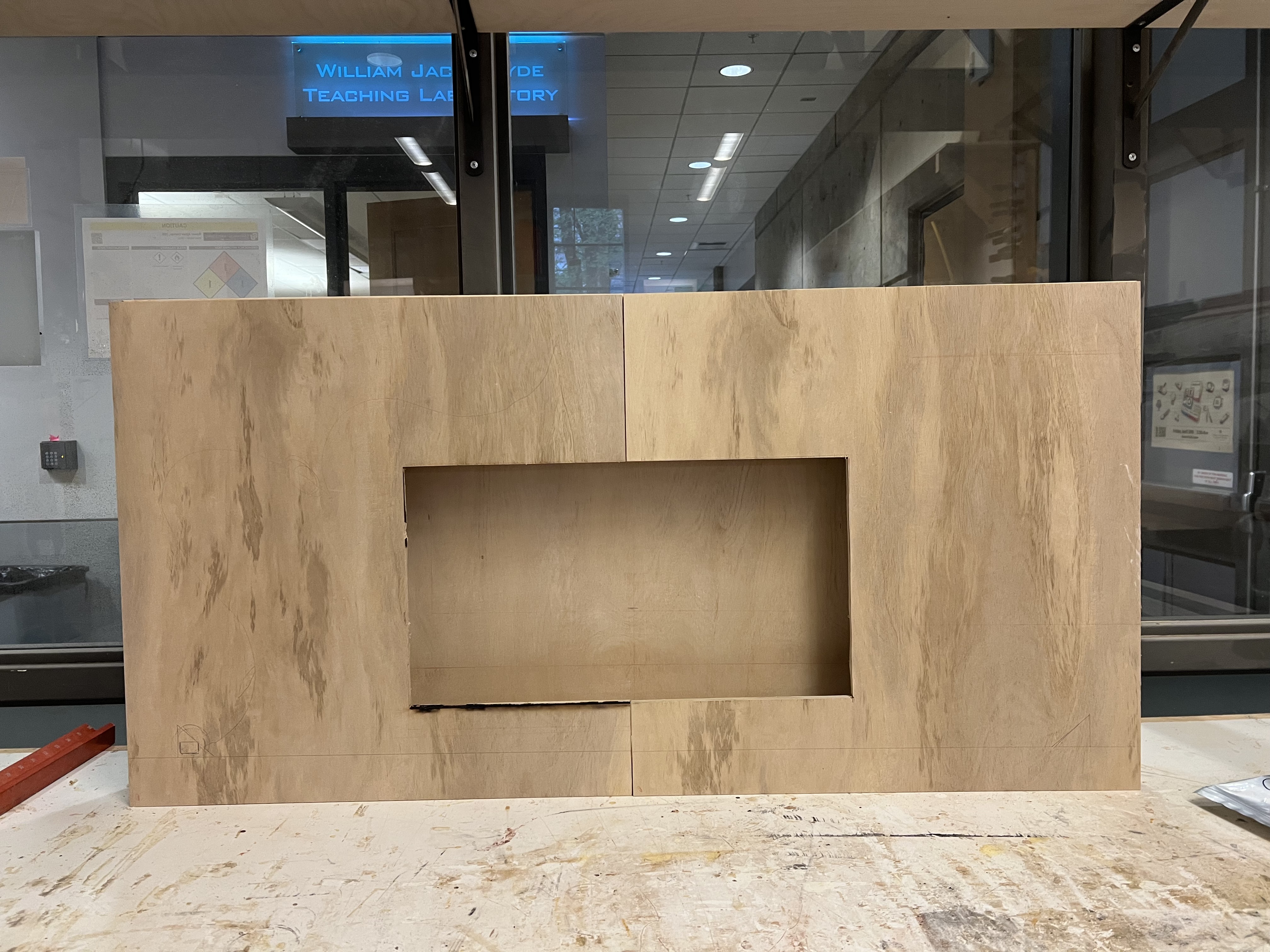
The cabinet was designed and built from scratch using 2x4 lumber framing and plywood panels. Tree branch forms were sculpted over pool noodle armatures using drywall compound and plaster of Paris, finished with primer and white acrylic paint.
An Arduino Mega drives mmWave radar sensors and DotStar LED strips. A Raspberry Pi runs a custom Next.js web application that manages submissions and displays leaves on a monitor in real time. NFC tags mounted on the sculpture link directly to the submission portal with no app download required.
The Process
Rooted began with a question: what kinds of interactive experiences do people actually want in a public space? A 19-respondent survey conducted at the University of Colorado Boulder showed that tactile and interactive elements ranked as the most appealing type of installation. A surprising number of respondents also expressed a want for something calming and low pressure. Both of those findings shaped this project directly.
The Research
The survey explored public interest across installation types including digital, physical, sound-based, and participatory formats. Respondents consistently ranked hands-on interactivity highest, citing a desire to feel personally involved rather than passively observed.
Secondary research into tree biology, epigenetic memory in plants, and root communication networks reinforced the core thesis. Trees are not just a visual metaphor for community. They are a functioning model of it.
The Results
Rooted was designed to be experienced, not explained. The prompts were tested and refined to be open enough for anyone to answer regardless of background, language, or familiarity with the space.
The physical build, electronics, and web application were all developed and iterated in parallel. The result is a piece where the sculptural and the digital are inseparable. The tree is both the artwork and the interface.
Community Resources
Rooted is about community and community means showing up for each other. Here are real resources available to you and your neighbors in Colorado. No barriers, no judgment. Just information.
Rooted · ATLAS Institute · CU Boulder · 2026